
You arrive in Marrakech and the menu is in Arabic, French, sometimes English — but the names of the dishes don’t translate. Here’s what’s really behind the words you’ll see everywhere.
The definitions below are sourced; the sources are listed at the bottom of the page.
Tagine
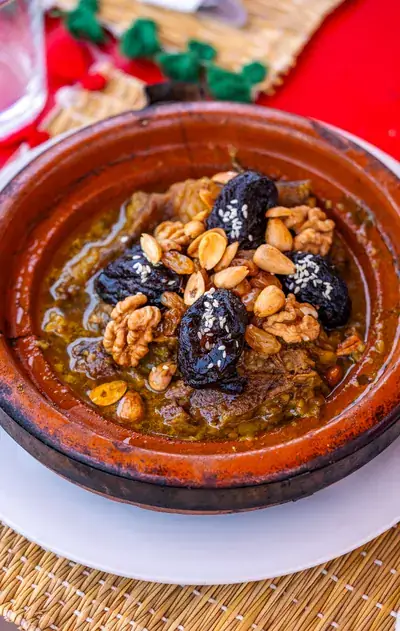
The word first refers to the earthenware dish with its cone-shaped lid — and by extension to what is cooked in it. Steam condenses under the cone and falls back onto the food, allowing slow, covered cooking.
There are said to be around 400 varieties. The most common combine meat or fish with spices — cinnamon, saffron, ginger, coriander — and often dried fruit: almonds, prunes, apricots.
If you only try one: chicken tagine with preserved lemon and olives.
Couscous
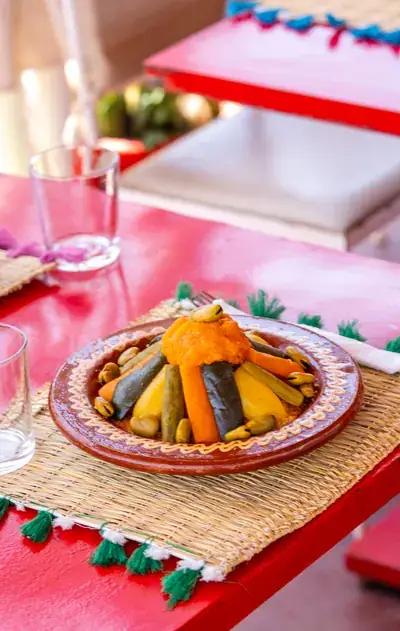
Wheat semolina rolled into grains and steamed above a broth of vegetables and meat. It is the national dish, and traditionally the Friday dish.
The most widespread versions: with seven vegetables, with lamb, with chicken, or tfaya — with caramelised onions, raisins and cinnamon.
Tanjia, the Marrakech speciality
This one you won’t find everywhere in Morocco: tanjia is the dish of Marrakech.
Meat — beef or lamb — marinated in cumin, ginger, garlic, saffron and olive oil, sealed in an earthenware jar and cooked very slowly. Historically the jar was placed in the ashes of the neighbourhood hammam furnace, where it cooked for several hours.
It’s a dish of patience. If you see it on a menu, take the chance.
Harira
The best-known soup in the country, of Andalusian origin. Made with tomato, chickpeas, lentils, meat and vermicelli or rice, thickened with flour.
It’s eaten all year round, but it comes into its own during Ramadan: it’s what the fast is broken with.
Pastilla
A sweet-and-savoury pastry, originally from Fez. Traditionally made with pigeon, today most often with chicken, with almonds, eggs, cinnamon and icing sugar on top.
The combination is disconcerting at first. Then it makes sense.
Moroccan salads
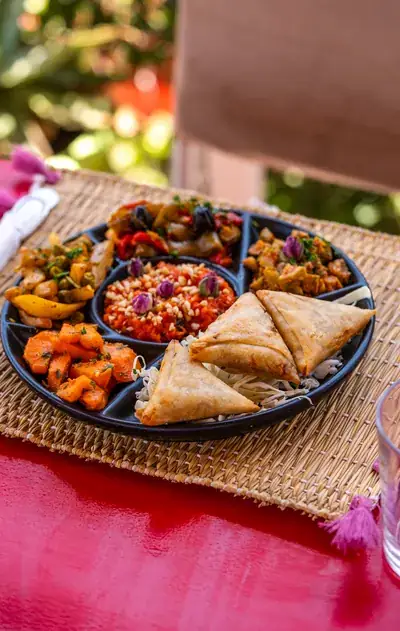
These are not green salads: they are cooked or raw vegetable preparations, served in small bowls before the main course and eaten with bread.
The most common ones:
- Zaalouk — aubergine and tomato slow-cooked with olive oil, garlic and cumin
- Taktouka — grilled peppers and tomatoes
- Cumin carrots — cooked, spiced, sometimes with preserved lemon
- Beetroot — diced, with parsley and dressing
- Tomato salad — with black olives and coriander
- Red cabbage, roasted squash, vegetable rice depending on the house

Msemen and briouates
Msemen is a flaky flatbread, folded into a square and cooked in a pan. It’s eaten at breakfast with honey, or stuffed as a main dish.
Briouates are small triangular pastries, filled with meat or fish — and in the sweet version, with almonds.
The sweets
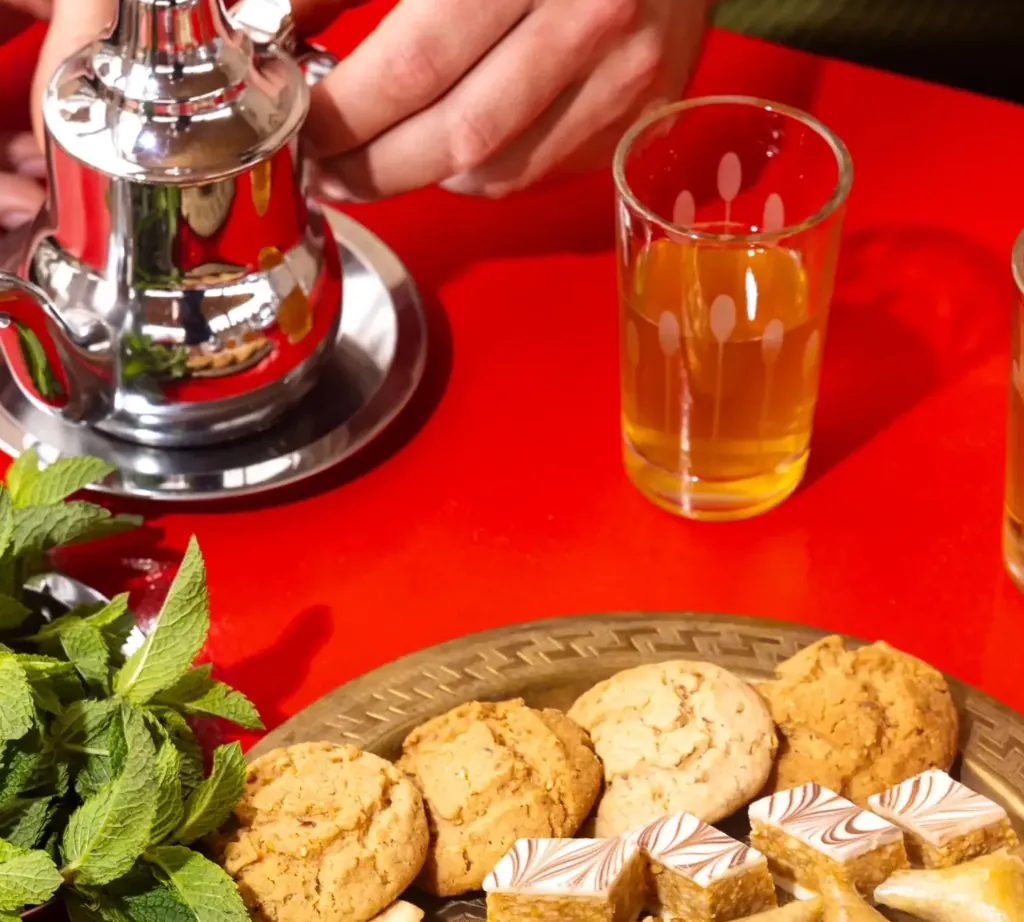
Gazelle horns: thin pastry rolled around an almond filling. Probably the best-known Moroccan pastry.
Chebakia: dough shaped into a flower, fried then dipped in honey and sprinkled with sesame seeds.
Mint tea
It’s not a drink, it’s a ritual. Green tea, fresh mint, sugar — and it’s poured from high up, to aerate the tea and create foam on the surface.
A surprising detail: tea is not an ancient product in Morocco. It was introduced by the British in the mid-18th century, through the ports of Mogador (Essaouira) and Tangier.
The balance changes by region: very sweet in the north, more fragrant in the south where saffron is sometimes added.
Where to taste them in the medina
At Kui-Zin, the buffet brings together a selection of Moroccan dishes — salads, tajines, sides — as well as vegetarian options, lunch and dinner.
See the Moroccan buffet · Learn to cook them · What happens in a class · Tea time · The rooftop with live music
12, Rue Amsefah, Sidi Abdelaziz, Medina, Marrakech — open every day from 10am to 10:30pm.
Sources
- Moroccan cuisine — Wikipedia (French): definitions of tagine, couscous, pastilla, harira, msemen, briouate, mint tea, gazelle horns and chebakia.
- MaroCulturel — guide to Moroccan gastronomy: tanjia, the Marrakech speciality.
Published on 13 August 2026.